
Navigating GDPR Compliance, CET Timezone Overlap, and Production-Grade Engineering from India
Executive Summary
European technology organizations face an unprecedented engineering paradox. Demand for digital product innovation—from AI integrations and legacy monolith refactoring to multi-tenant SaaS expansion—has accelerated, while local engineering recruitment in tech hubs like London, Berlin, Amsterdam, and Stockholm has hit critical bottlenecks.
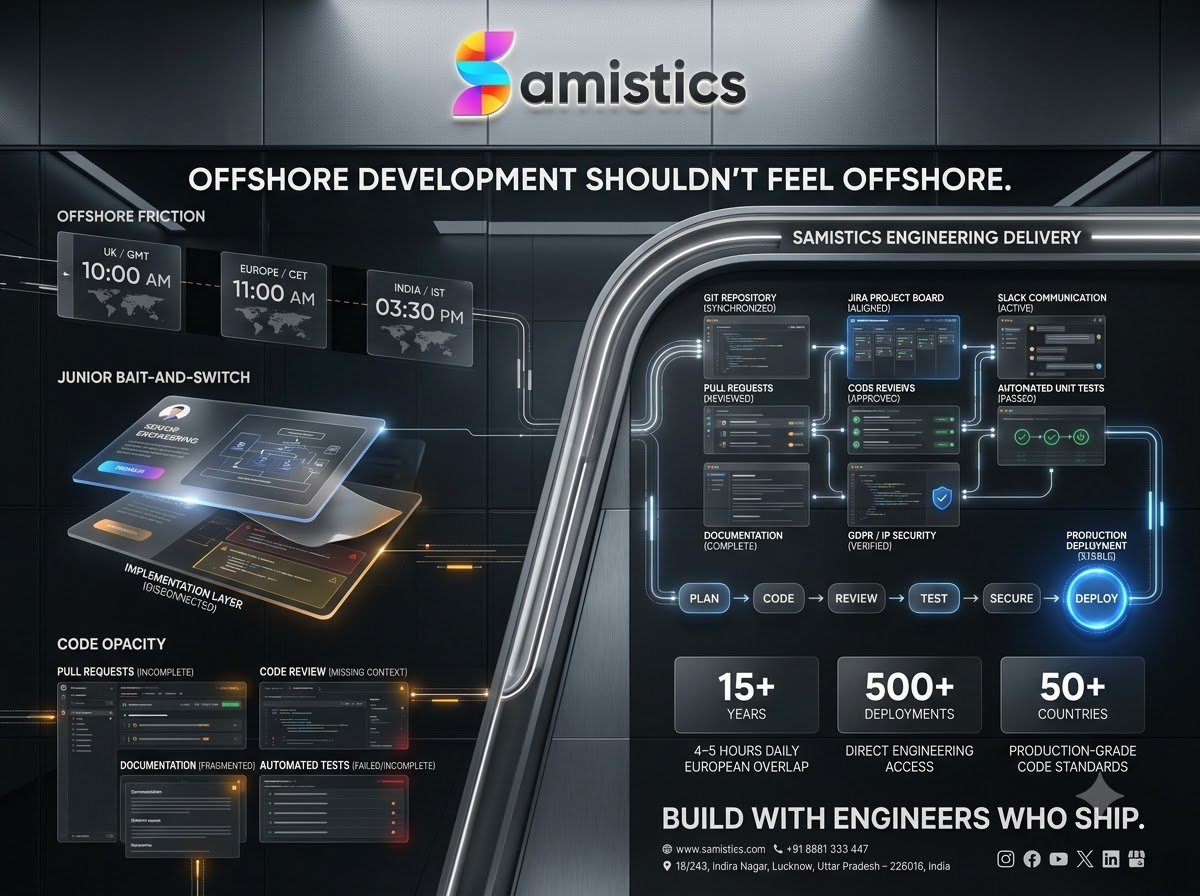
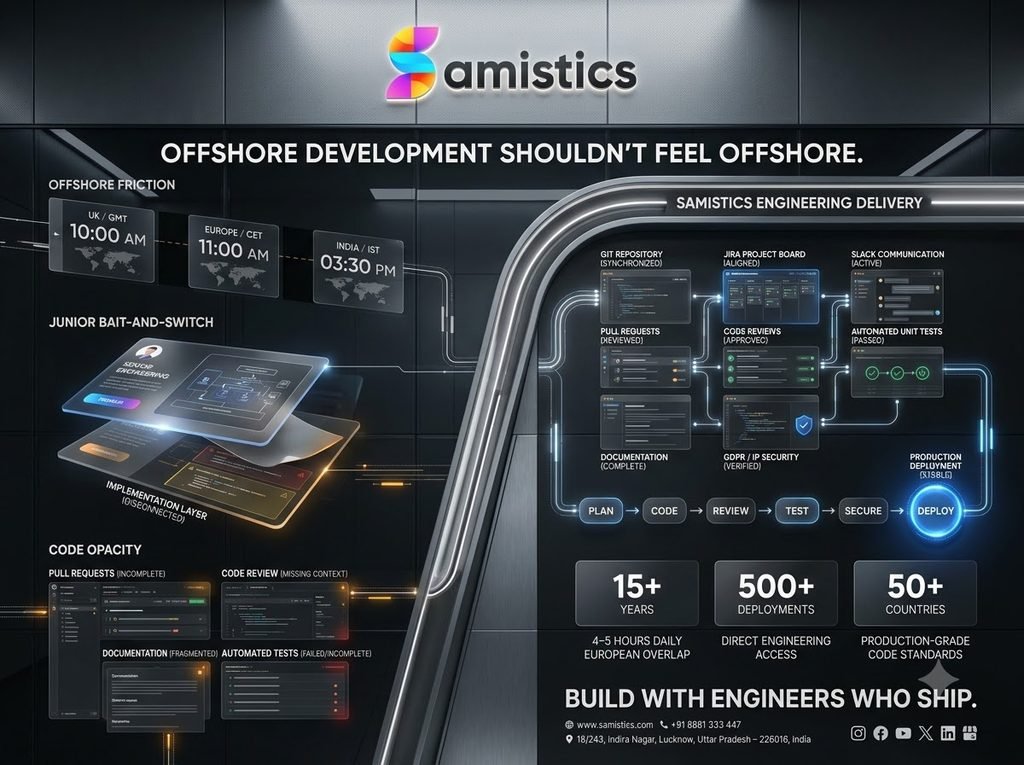
However, traditional low-cost outsourcing is fundamentally broken. Fragmented communication, zero working-hour overlap, code opacity, and legal vulnerability under the EU General Data Protection Regulation (GDPR) have led to widespread project friction.
This guide outlines a modern offshore engineering framework for European enterprises: how to partner with dedicated engineering squads in India while addressing architectural quality, Central European Time (CET) collaboration, regulatory requirements, and delivery transparency.
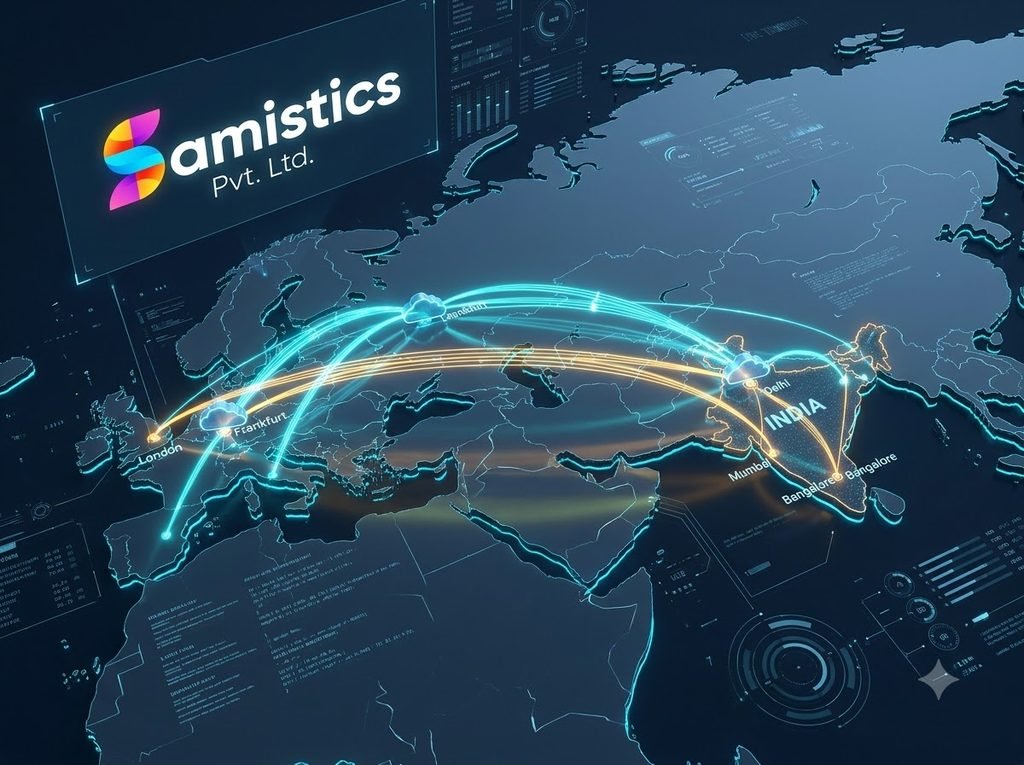
Offshore software development team in India supporting European businesses
1. The European Software Engineering Landscape: Talent Scarcity vs. Delivery Velocity
Over the past five years, the European tech sector has shifted from exploratory cloud adoption to high-intensity platform engineering. Whether a Series-B fintech in Frankfurt or an enterprise logistics firm in Manchester, engineering leaders face three persistent structural headwinds:
- Prohibitive Local Acquisition Costs: Between recruitment agency commissions (typically 20–25% of first-year base salary), statutory notice periods extending up to three months, and high domestic tax structures, scaling an internal team of 10 senior full-stack engineers in Western Europe requires massive upfront capital deployment.
- The Eastern European Nearshoring Saturation: Historically, European CTOs looked to Poland, Romania, and Ukraine for nearshore capacity. Today, developer rates in Eastern European hubs have converged dramatically with Western European levels (€65–€95/hour for senior architects), while geopolitical volatility and macroeconomic pressures have strained talent continuity.
- The Trap of ‘Cheap’ Outsourcing: Many European organizations that turned to low-tier outsourcing vendors were burned by the Junior Bait-and-Switch: senior resumes are showcased during enterprise procurement, but the codebase is quietly handed to unvetted junior contractors. The downstream result is brittle architectures, untracked tech debt, missing documentation, and failed security audits.
2. GDPR & Data Sovereignty: Moving Beyond the Standard DPA
For European CTOs, the biggest risk in offshore development isn’t a data breach; it’s a lack of verifiable data lineage. A standard Data Processing Agreement (DPA) is insufficient if the engineering partner cannot demonstrate where code, production logs, and customer data are physically stored.
The “Indian Subcontinent” Data Risk
While India has robust data protection frameworks, the regulatory landscape differs from the EU. European companies must ensure their Indian partners adhere to strict contractual and technical controls.
Data Residency: Critical production data should remain within EU/EEA boundaries. Offshore engineers should access data through secure, audited “Data Docks” (VPNs or VDI) rather than downloading datasets locally.
The Sub-Processor Chain: You must map every entity that touches your data. If your Indian vendor uses a third-party cloud or subcontractor, that entity must be disclosed and compliant with your DPA.
Technical Enforcement: Compliance cannot be just a PDF. Enforce SSO, MFA, IP whitelisting, and “Zero Trust” access models. If a developer’s IP is not on the allowlist, they cannot access the repository.
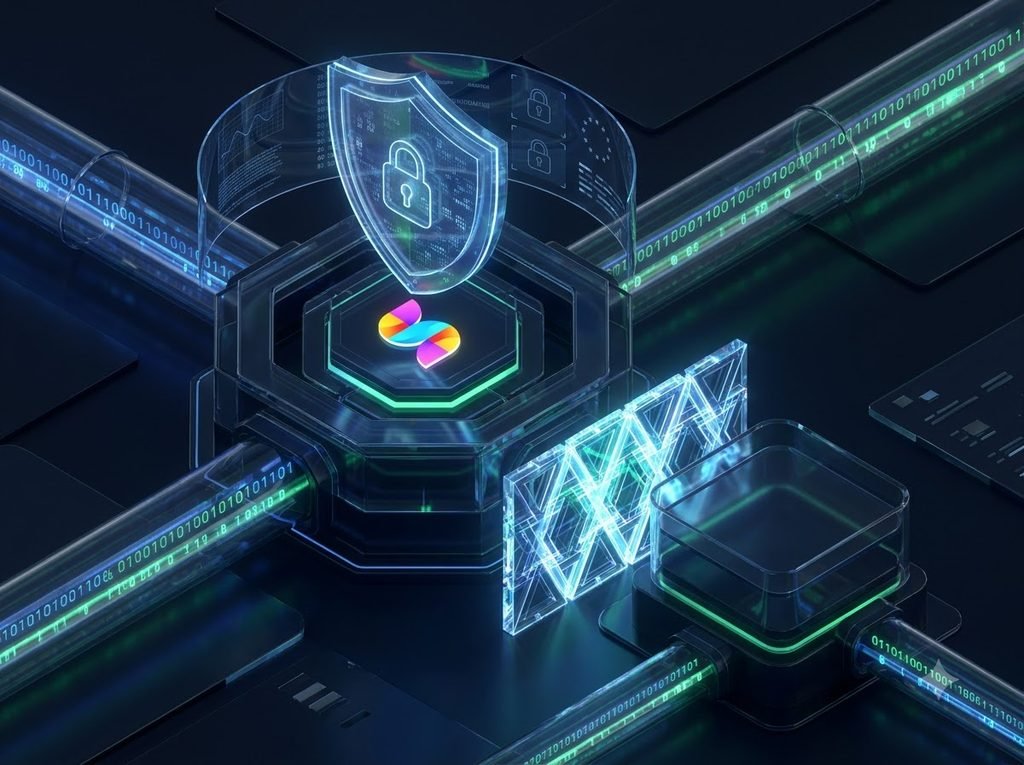
GDPR compliant offshore software development and secure data access
3. The CET/IST Advantage: Engineering as a Continuous Relay
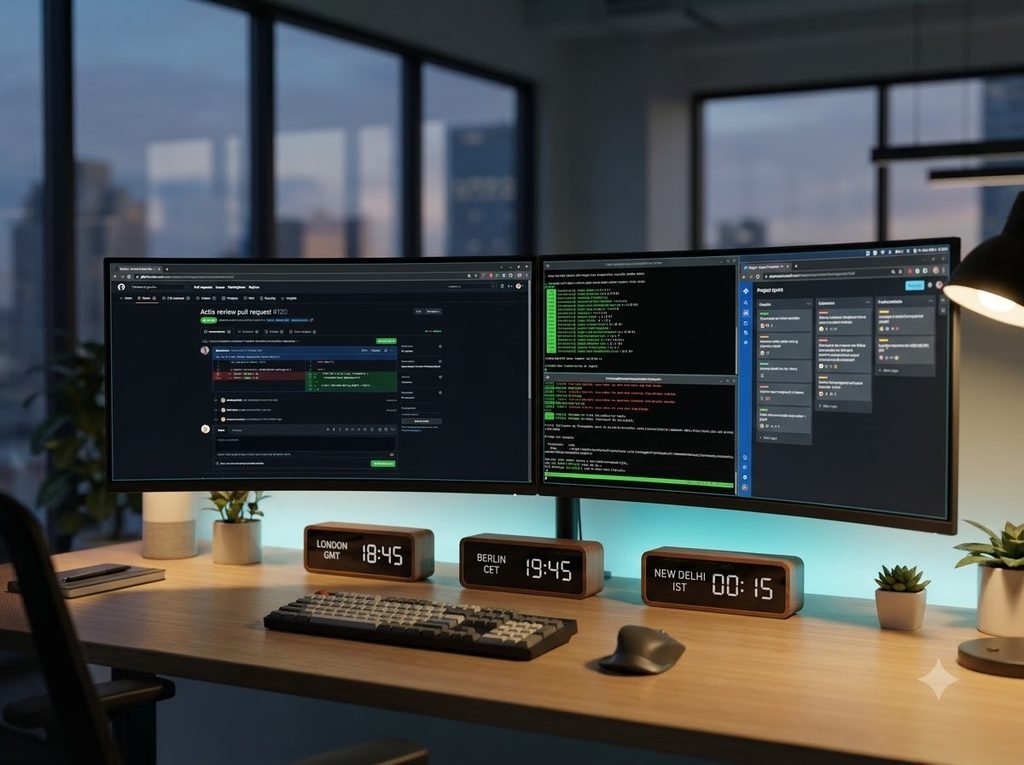
Asynchronous communication sounds attractive in theory, but in high-stakes software engineering, pure asynchronous handoffs often translate to lost delivery velocity. If a pull request review or an architectural blocker discovered at 2:00 PM CET has to wait 16 hours for an answer, two-week sprints quickly stretch into months.
| Central Europe (CET) | India (Samistics / IST) | Operational Phase & Focus |
| 08:00 – 11:30 CET | 12:30 – 16:00 IST | Autonomous Deep-Work Block: Focused sprint ticket execution, test suite scripting, and local PR builds. |
| 11:30 – 16:00 CET | 16:00 – 20:30 IST | Core Collaboration Window: Live daily standups, sprint planning, PR reviews, pair programming, and architectural alignments. |
| 16:00 – 18:00 CET | 20:30 – 22:30 IST | Verification & Handoff: Staging environment deployments, automated QA suite runs, and async daily summary logging. |
4. Architectural Rigor: Modern Tech Stacks and Quality Engineering
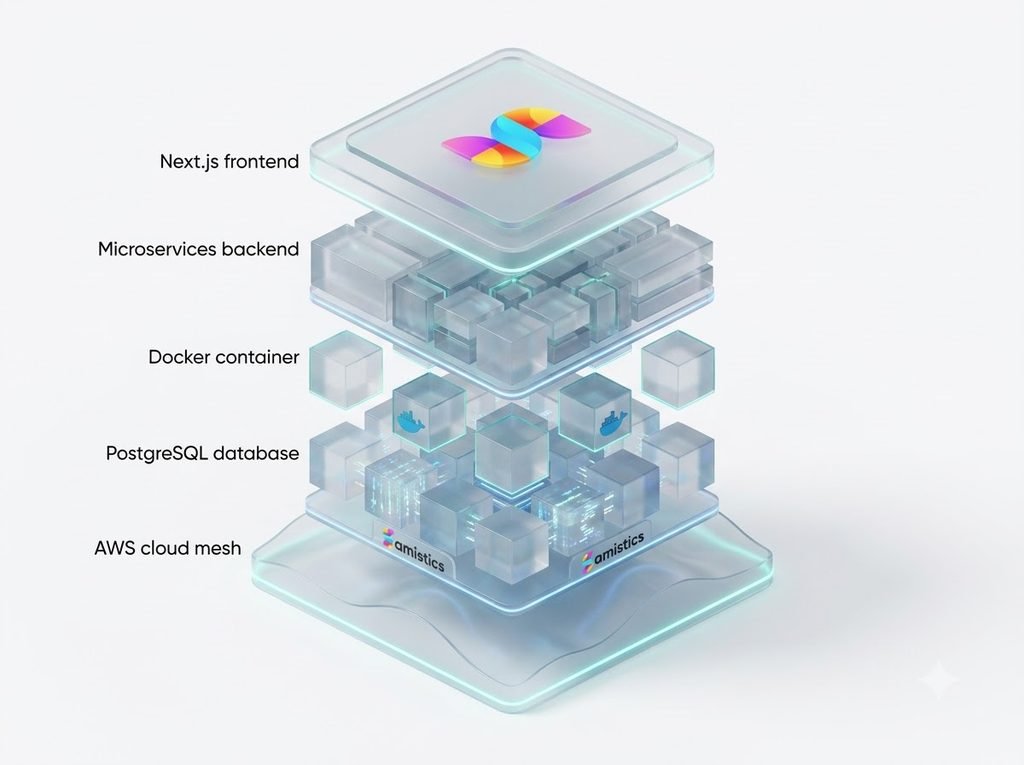
Enterprise software engineering is not about writing throwaway code; it is about building maintainable, resilient architectures capable of scaling across 5 to 10 years of business operations. European CTOs require technical teams fluent in enterprise design patterns, cloud-native infrastructure, and shift-left quality assurance.
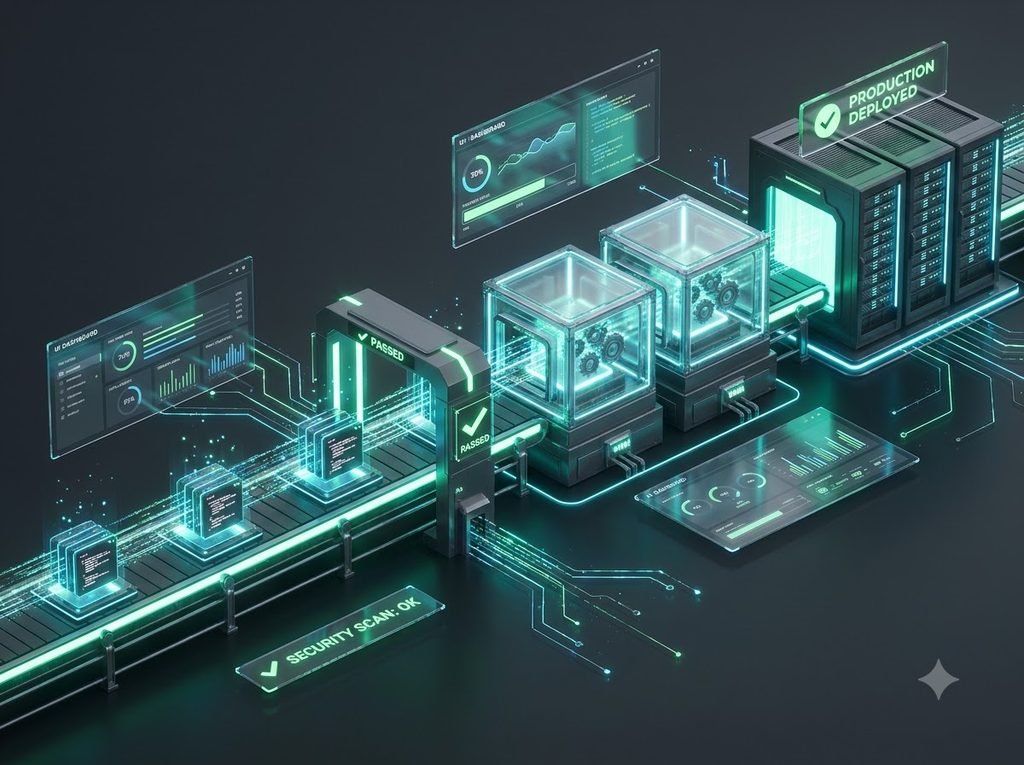
- Automated Static Code Analysis: Pull requests must pass automated SonarQube or ESLint gates checking for cyclomatic complexity, security vulnerabilities, and code duplication before peer review.
- Mandatory 80%+ Test Coverage: Unit and integration test suites (using Jest, PyTest, or Go testing packages) must maintain a minimum 80% coverage threshold on all business-critical domain logic.
- Containerized CI/CD Deployments: Automated pipeline builds in GitHub Actions, GitLab CI, or Bitbucket run regression tests and vulnerability scans on Docker container base images prior to staging merges.
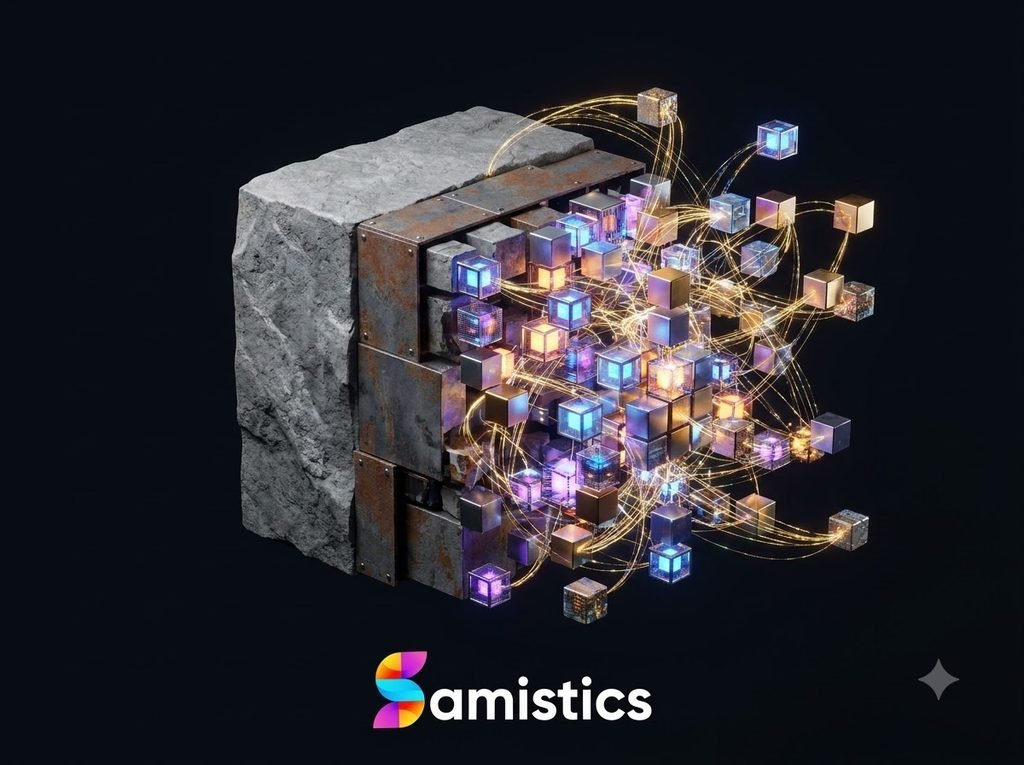
- Legacy Modernization via Strangler Fig: Decomposing monolithic applications by extracting domain contexts into independently scalable microservices behind an API gateway, slashing response times from seconds to sub-100ms.
5. Engagement Models: Staff Augmentation vs. Dedicated Squads
Aligning the right engagement structure is critical to team velocity and operational friction. Samistics provides two distinct engagement frameworks tailored to organizational maturity:
Model A: Dedicated Autonomous Squads (Cross-Functional Pods)
Ideal for European companies building a complete greenfield product, refactoring a legacy platform, or expanding a SaaS tier without hiring an entire internal engineering department. A typical pod consists of 1 Lead Solution Architect, 2–4 Senior Full-Stack Engineers, 1 QA Automation Engineer, and 1 Agile Delivery Lead managing sprint delivery end-to-end.
Model B: Team Extension / Staff Augmentation
Designed for organizations with established engineering leadership that need mid-to-senior engineering capacity to clear technical backlogs. Dedicated engineers embed directly into the client’s Slack, Jira/Linear boards, and daily standups, pushing pull requests directly to client repositories under their internal governance.
6. The European Vendor Evaluation Scorecard
Before executing a Master Services Agreement (MSA) with an offshore software engineering partner, European engineering directors should benchmark their shortlisted vendors against this 7-point enterprise matrix:
| Evaluation Dimension | Common Industry Flaw | The Samistics Benchmark |
| Working Hours Overlap | Asynchronous only / 10-hour delay | Guaranteed 4–5 hour daily live overlap with CET and GMT schedules. |
| Data Protection & GDPR | Vague claims of generic ‘privacy’ | Formal GDPR DPA with SCCs and isolated zero-PII staging environments. |
| Intellectual Property | Complex licensing / vendor lock-in | 100% intellectual property assignment immediately upon repository commit. |
| Developer Vetting | Blind allocation of unverified juniors | Direct technical screening and client code interviews for every engineer. |
| Quality Assurance | Manual regression testing at end of sprint | Shift-left automated test pipelines integrated into Git branching workflows. |
| Delivery Transparency | Weekly black-box milestone reports | Real-time repository commits, PR reviews, and transparent sprint burndown. |
| Corporate Track Record | Unverified, newly established agencies | 15+ years of operational track record with 500+ successful enterprise deployments. |
7. Accelerate Your Engineering Roadmap with Samistics
Building mission-critical digital products requires engineering discipline, transparent communication, and an uncompromising focus on code quality. Samistics Pvt. Ltd. brings over 15 years of software engineering excellence, supporting international enterprises, fast-scaling tech companies, and mid-market organizations across 50+ countries.
| NEXT STEPS FOR ENGINEERING LEADERS: 1. Architectural Discovery Call: Review your product roadmap, system bottlenecks, and current technical debt with our senior solution architects. 2. Code & Architecture Audits: Inspect our past implementations, test suite designs, and microservice refactoring case studies. 3. Two-Week Pilot Sprint: Evaluate code quality, documentation standards, and communication cadence with a targeted, low-risk proof-of-work engagement. Schedule your technical consultation with Samistics |